

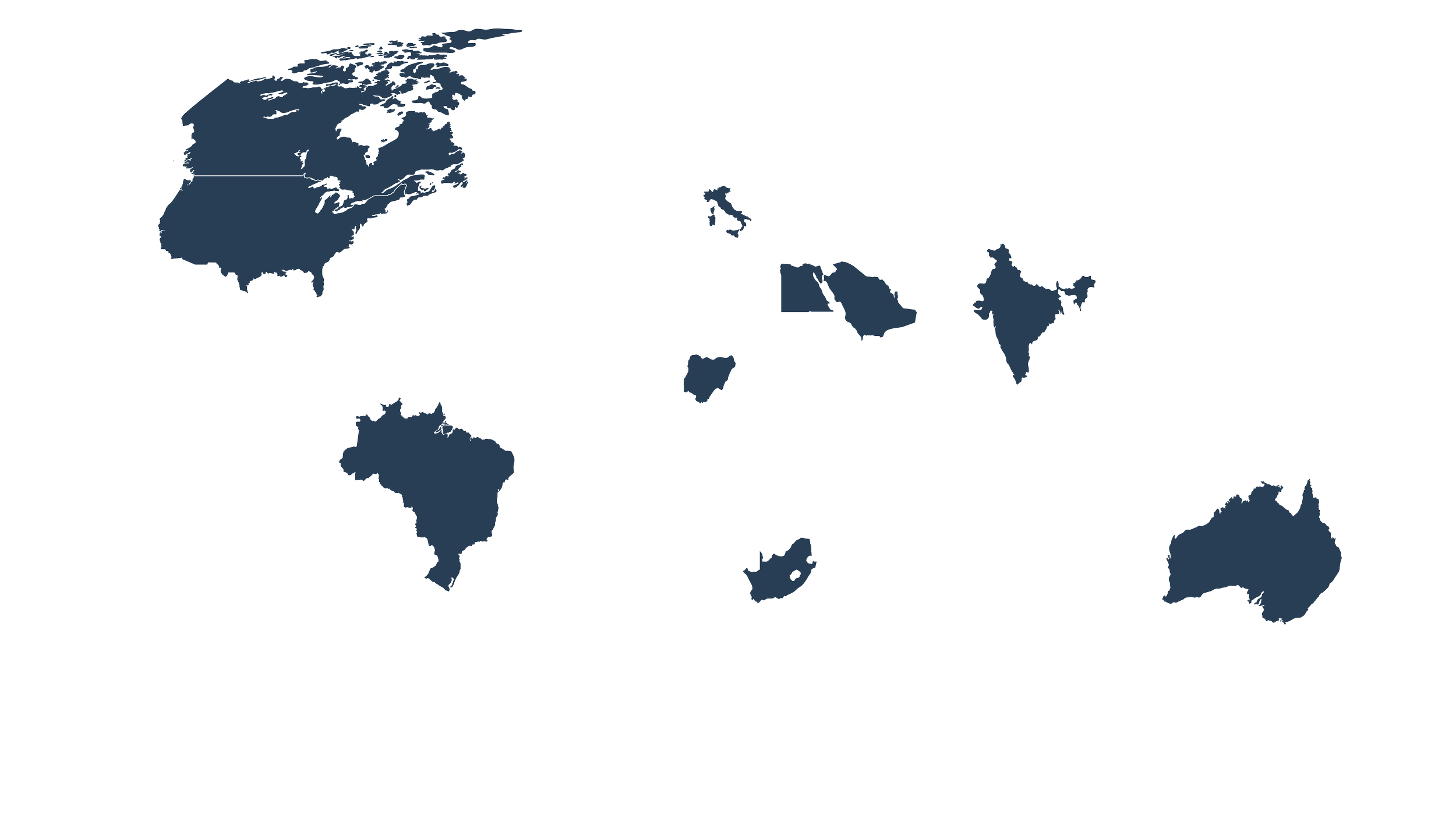
Our global contribution to a greener future.
Portfolio selection.
Every industrial environment presents unique technical and operational challenges.
This section highlights selected projects delivered by REDECAM across different sectors and geographies. Each case study outlines the client context, the specific air filtration or dust control challenge, the engineered solution, and the measurable results achieved.
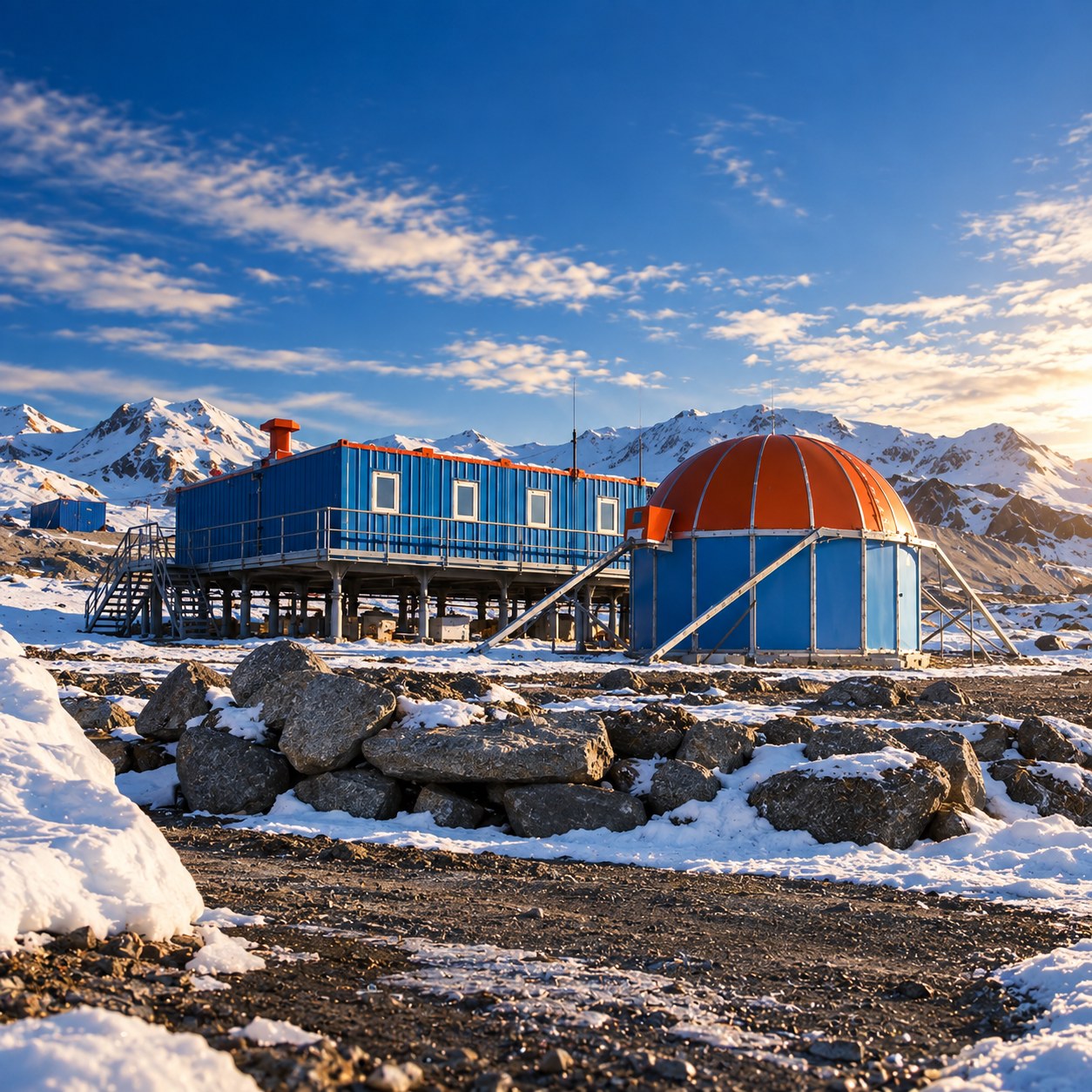
ENEA Research Station
Antarctica
-
In 2002, Redecam supported ENEA and the National Antarctic Research Program (PNRA) at Italy’s Mario Zucchelli Station in Terra Nova Bay, providing critical wastemanagement infrastructure to enable safe, reliable base operations during the 18th Italian Antarctic expedition.
The project was scope was the engineering and the supply of the complete line for solid waste incineration, from boiler to the flue gas treatment: Bag Filter, Dry Injection Desulfurization & Mercury Adsorption with Sorbalite, mechanized ash unloading system, chimneys for emergencies & process with exhaust fan. The design and installation have been done using containers to reduce the erection and the commissioning time on the coldest place on earth.
Operating in Antarctica is not just a technical mission, it’s a test of resilience, innovation, and precision. Year after year, scientific and logistical activities generate municipal solid waste that must be managed on site, with solutions capable of ensuring maximum efficiency without compromising the pristine environment or interrupting PNRA field campaigns coordinated by ENEA.In one of the most remote and demanding research environments on Earth, every operation is a race against time. The narrow weather windows, extreme distances, and complex transport conditions made the rapid erection and commissioning of the system one of the project’s greatest challenges.
Delivering a fully functional plant under such constraints demonstrates not only technological excellence, but also the ability to operate where few others can—turning an extreme environment into a showcase of reliability, sustainability, and highperformance engineering.
The project safeguards continuity of PNRA field campaigns and supports ENEA’s responsibility for technicallogistics management of Antarctic stations, maintaining high safety and environmental standards. Operational scale is consistent with the station’s real demand: approximately 15 tons incinerated per summer season across around five cycles, serving a seasonal population of about 80–90 people—evidence of reliable, continuous service in extreme conditions.
In short, Redecam and ENEA turned an extreme challenge into a showcase of reliability, sustainability, and execution precision—with a solution purposebuilt for Antarctica that protects the environment, supports the scientific mission, and delivers where few can operate.
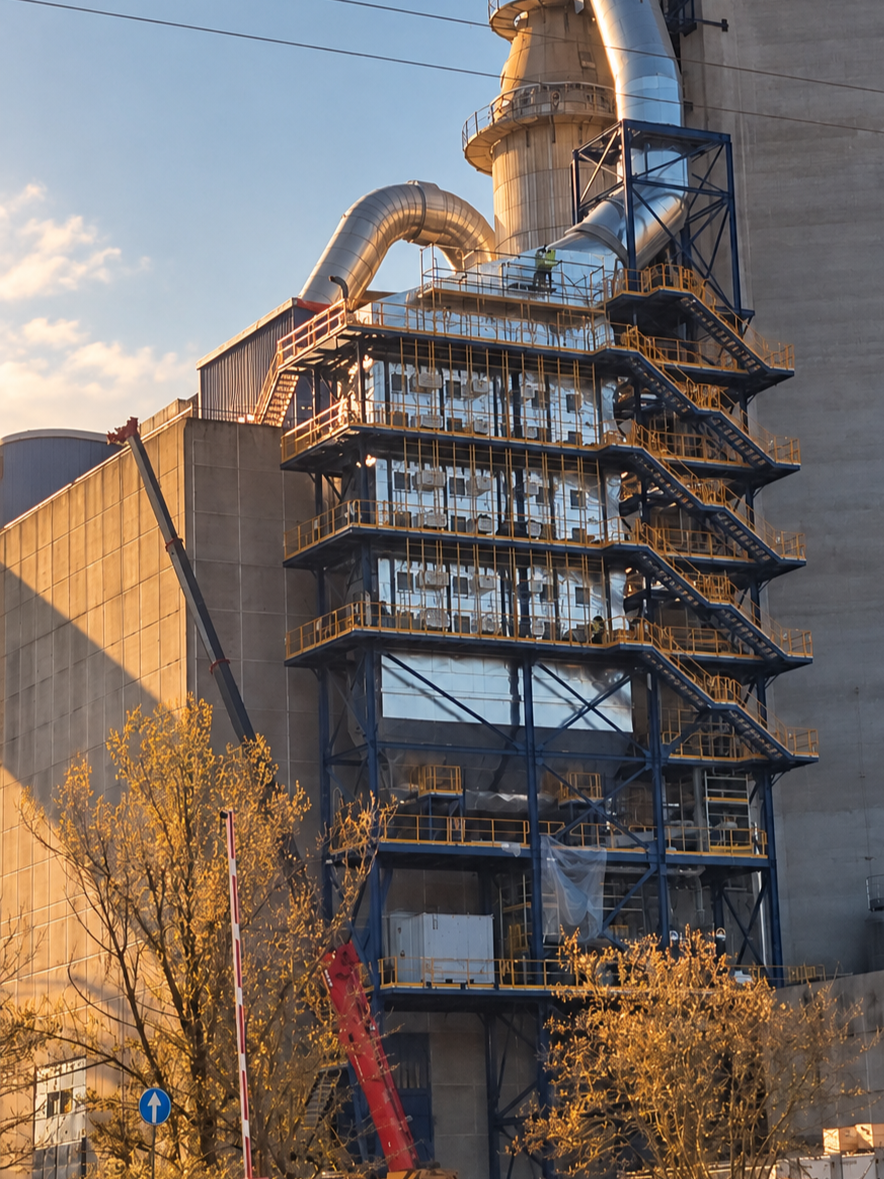
BuzziUnicem.
Vernasca Plant. Italy
-
The main objective of this project was the reduction of water consumption in the gas conditioning tower within the process. The adopted solution was the installation of a boiler associated with a steam turbine capable of producing energy thanks to the superheated water generated by the above-mentioned equipment.
As this is a brownfield plant, the positioning of the equipment was carefully studied in order to minimize the impact and footprint on the existing facility. The current solution allows the plant to avoid the use of the gas conditioning tower under all operating conditions by routing the gases through the boiler.
The Redecam solution consists of a boiler installed in series with the kiln process, with the possibility of being bypassed for maintenance operations. Connected to the heat exchanger is a steam turbine system that produces energy.
The Redecam boiler is designed to deliver up to 11 MW of thermal power at peak and approximately 9 MW of thermal power on average.
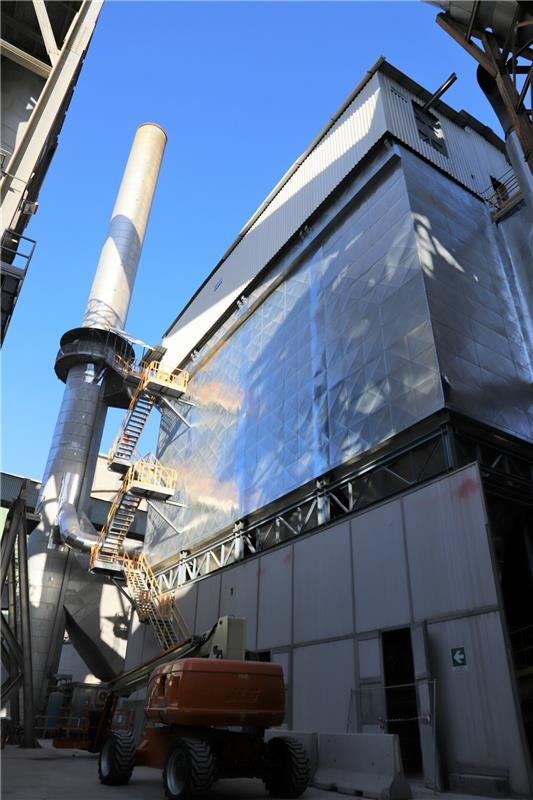
Holcim Italia
Ternate Plant. Italy
-
Redecam was awarded the EPC contract to modernize the main process kiln filter at Holcim’s Ternate Cement Plant. The obsolete electrostatic precipitator (ESP) was dismantled and replaced with a stateoftheart bag filter, ensuring full compliance with dustemission limits. The key challenge was to execute a largescale upgrade—about 470 tons of equipment and structures—within a highly constrained footprint and a kiln shutdown window of no more than 24 days.
Our Solution:
At the heart of the project lies modularization. The new process filter—sized for up to 815,000 Am³/h—was split into 8 independent modules, each specifically engineered, fully preassembled, and delivered installationready. Standardized interfaces, preequipped steelwork, and plugandplay connections drastically reduced onsite assembly time, compressing critical activities into the short outage. Offsite prefabrication shifted most works to the workshop, minimizing work at height and onsite welding, with clear benefits in schedule, safety, and build quality. The lift-and-set sequence was planned to limit interference with existing assets. The system handles gases from the kiln, raw mill, and clinker cooler, delivering a fully Integrated Bag House Filter across both sides of the plant.
The final configuration
A completely new bag filter and fan were installed within the original footprint, complemented by optimized and enlarged ductwork. The upgrade delivers significant emission improvements, greater system reliability, and enhanced operational flexibility under all operating conditions—while ensuring a shorter, safer, and more predictable site execution thanks to the modular approach.

Travi e Profilati di Pallanzeno (Duferco)
San Zeno. Italy
-
This specific EAF dedusting plant has several secondary or auxiliary suctions (LF, MHS, Ladle Treatment) including a dog-house installed around the furnace; moreover, it has been modified during its long history with additional suctions but has experienced a significantly reduced efficiency of canopy hood suction.
Our Solution: Using our internal know-how, we conducted a complete simulation of the scrap charging process, thanks to a new CFD approach with 4 variable parameters (T, V, P and time).
We improved the EAF dedusting system effectiveness and efficiency by studying a modification to the secondary suction from EAF Canopy Hood, that started from a complete CFD simulation of the scrap basket charging process and ended into a new simplified ducts system to reach the existing bag house filters.
The final configuration includes now a modified canopy hood, a simplified ductworks system with fewer but larger ducts, with effective improvement in terms of their better connection to the suction hood in order to suck immediately the dust before some cold air streamline could bring it to lower part of the EAF building. A new damper system and the new mixing chamber located upstream the bag filters complete the Redecam supply, executed on turn-key basis.
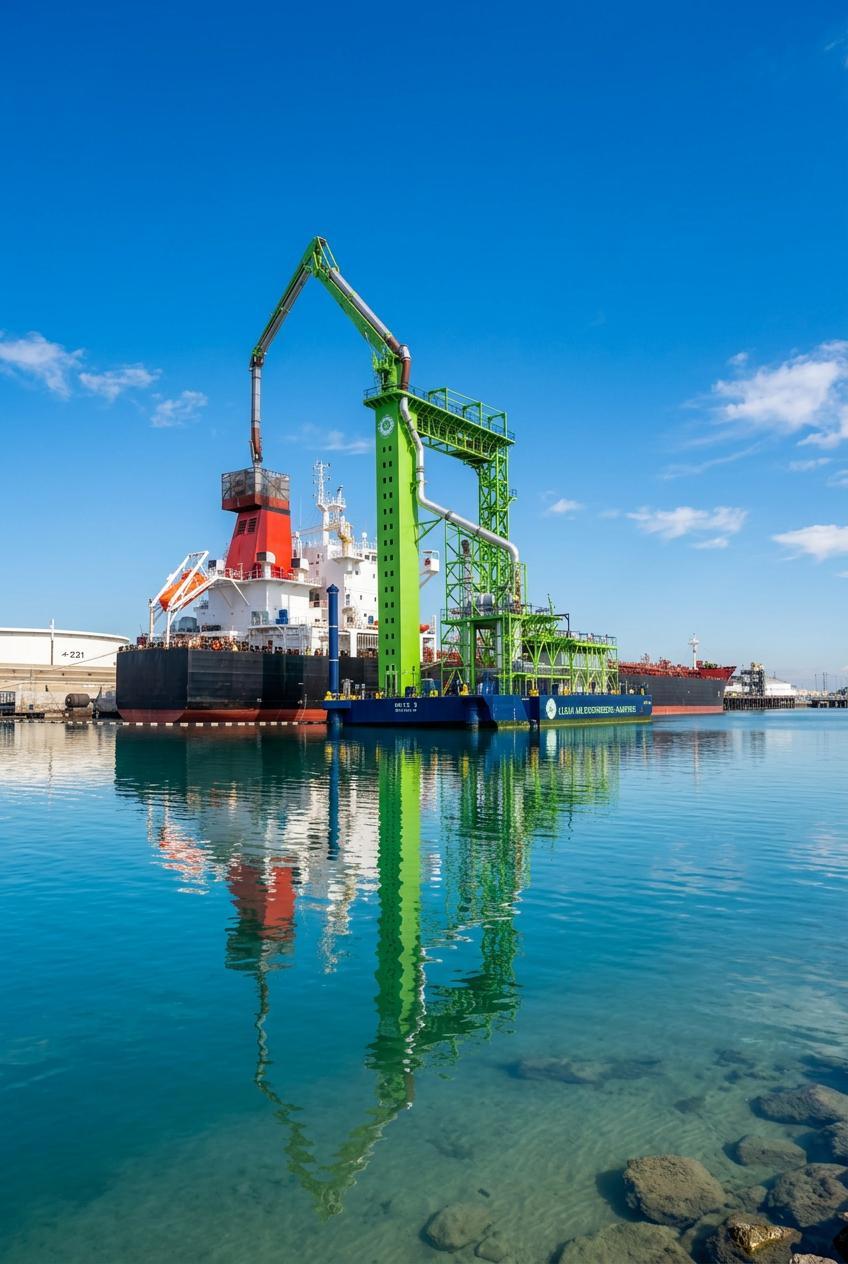
CLEAN AIR ENGINEERING MARITIME
Long Beach Seaport, CA (USA)
-
Redecam has been a technology partner in the CAEM (Clean Air Engineering Maritime) program, supporting the development and deployment of mobile at‑berth emission control systems designed to capture and treat exhaust gases from ocean‑going vessels while docked.
At the Ports of Long Beach and Los Angeles, Redecam technology has been applied to marine flue gas treatment systems designed to control emissions generated by vessels while docked, where auxiliary engines must remain in operation to support onboard activities.
The solution consists of mobile, barge‑based emission control units capable of capturing exhaust gases directly from vessels at berth and treating them before release to the atmosphere. These systems are specifically intended to prevent the dispersion of pollutants in port areas with high population density and strict environmental regulations. The flue gas treatment system addresses multiple pollutants, including SOx, NOx, Particulate Matter (PM), Volatile Organic Compounds (VOCs). The systems are designed to treat emissions from container vessels, oil tankers, break bulk and Ro-Ro.
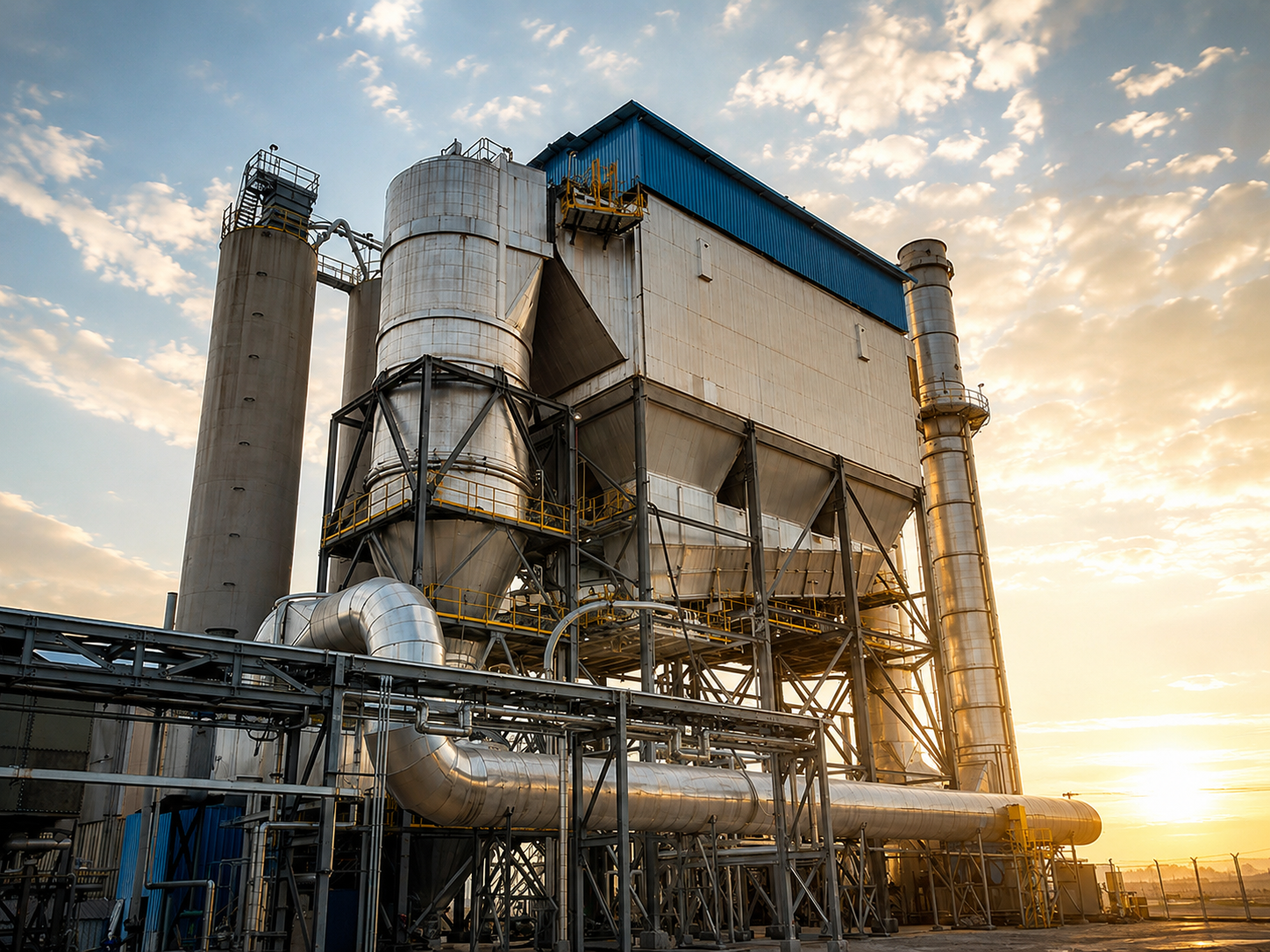
Orion Engineered Carbons
Borger , TX (USA)
-
Redecam engineered and supplied a high-performance flue gas treatment solution at Orion Engineered Carbons’ Borger, Texas carbon black plant specifically to reduce sulfur oxides (SOₓ) emissions. The system — a recirculating dry scrubber with optimized reagent injection and gas handling — was tailored for the plant’s high-volume of process gas. Operating reliably since installation, it has achieved very high SOₓ removal efficiency (up to ~98 % on treated streams) and significantly lowered sulfur dioxide emissions in support of Orion’s broader emissions control and air quality goals.
Project execution (Engineering, Supply, Delivery DDP): ~18 months
On-site installation phase: ~15 months (by Client)
Operational milestone: system running from January 2023 up today achieving the guaranteed performances
Redecam delivered a highly reliable and easy-to-operate SOₓ control system, achieving up to ~98% SOₓ reduction while meeting guaranteed emission limits with low consumption of standard hydrated lime, thereby minimizing reagent usage and overall operating costs.
The system has been operating reliably for multiple years, demonstrating proven reagent efficiency, predictable OPEX, and long-term performance in a demanding heavy-industrial environment.
HUAXIN CEMENT
NPC Simuma Plant. South Africa
-
Redecam successfully delivered a complete modernization of the Kiln & Raw Mill dedusting system of the Line 1 at the NPC Simuma cement plant in KwaZulu‑Natal, South Africa. The project replaced the existing electrostatic precipitator with a high‑efficiency Bag House Filter and included the installation of a new Gas Conditioning Tower, a new Kiln ID and a new Exhaust Fans (both Redecam make), a redesigned dust transport system with all Redecam made Screw Conveyors, and a fully renewed electrical and automation infrastructure.
The new system ensures significantly lower emissions, improved process stability, and reduced energy consumption. With optimized filtration performance, intelligent cleaning control, and reliable conveying of process dust, the solution enhances operational efficiency while supporting the plant’s environmental and sustainability goals.
-
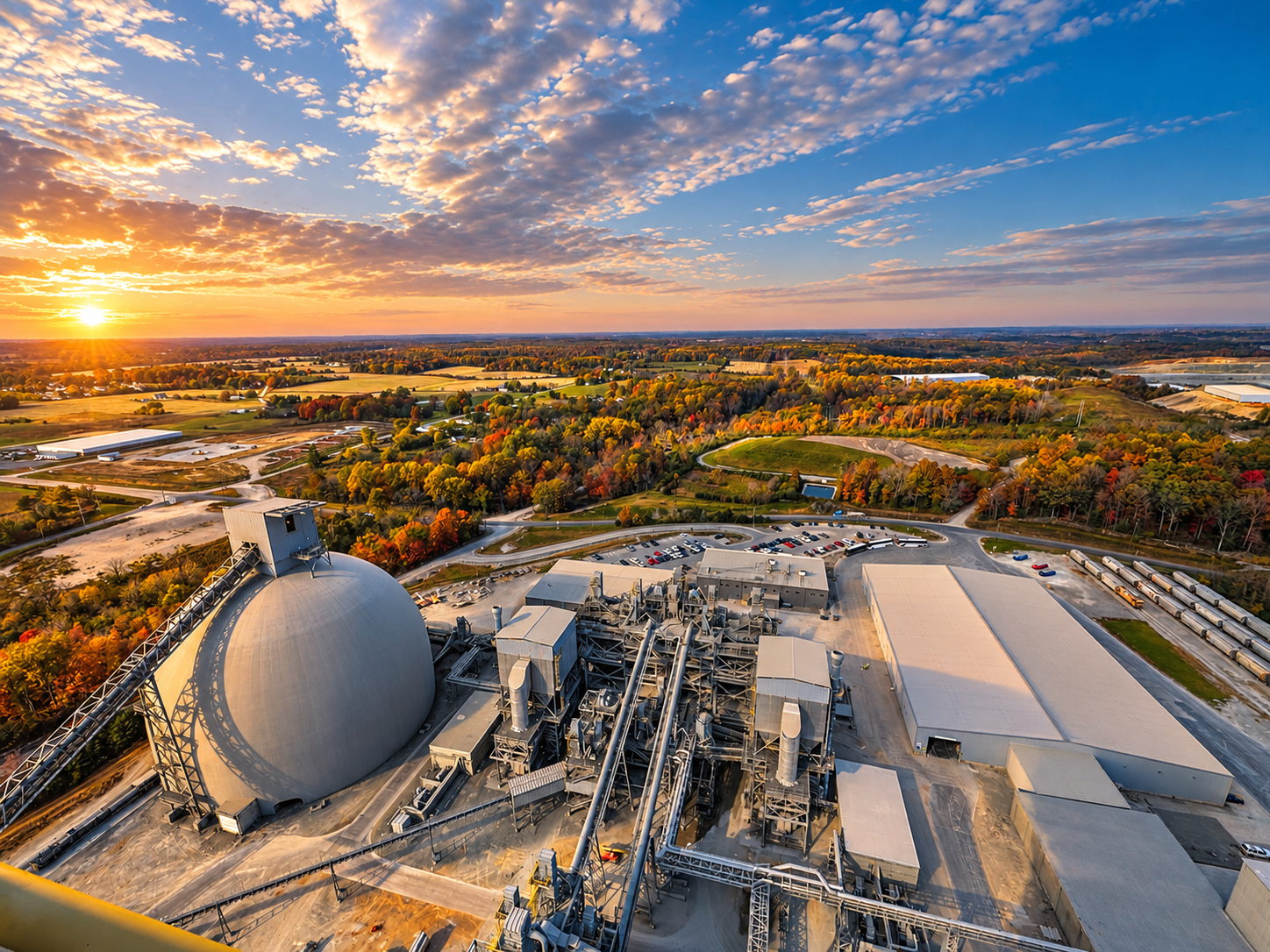
Heidelberg Materials
Mitchell, IN (USA)
-
At the Heidelberg Materials cement plant in Mitchell, Indiana, Redecam supplied a comprehensive, plant‑wide air pollution control solution addressing particulate, acid gas, and mercury emissions across multiple process areas.
The project included the engineering and supply of the entire dust collection system, featuring integrated process baghouses serving the Kiln & Raw Mill, the clinker cooler, and the Finish Mill. The clinker cooler system incorporates a dedicated cooler heat exchanger, designed to ensure efficient heat recovery while maintaining stable operating conditions for downstream filtration. All baghouse systems were engineered to achieve particulate emission levels below 5 mg/Nm³, supporting strict environmental compliance and long‑term operational reliability.
In addition to particulate control, Redecam supplied advanced gas‑phase emission control technologies. SOx and HCl removal is achieved through a Dry Sorbent Injection (DSI) system, providing effective acid gas neutralization and flexibility to accommodate variations in fuels and raw materials. Mercury emissions are controlled through an Activated Carbon Injection (ACI) system, enabling efficient mercury adsorption upstream of the filtration systems.
The Mitchell project highlights Redecam’s capability to act as a single‑source supplier for complex, integrated environmental solutions, combining dust collection, heat exchange, and multi‑pollutant control technologies. The installation supports Heidelberg Materials’ commitment to high environmental performance, regulatory compliance, and sustainable cement production.
Our approach combines process analysis, tailored system design, and long-term operational reliability.
The projects presented here demonstrate how REDECAM solutions improve air quality, support regulatory compliance, and enhance performance in demanding industrial environments.